
English| EUR
Suggested for you
More currencies
Choose a language
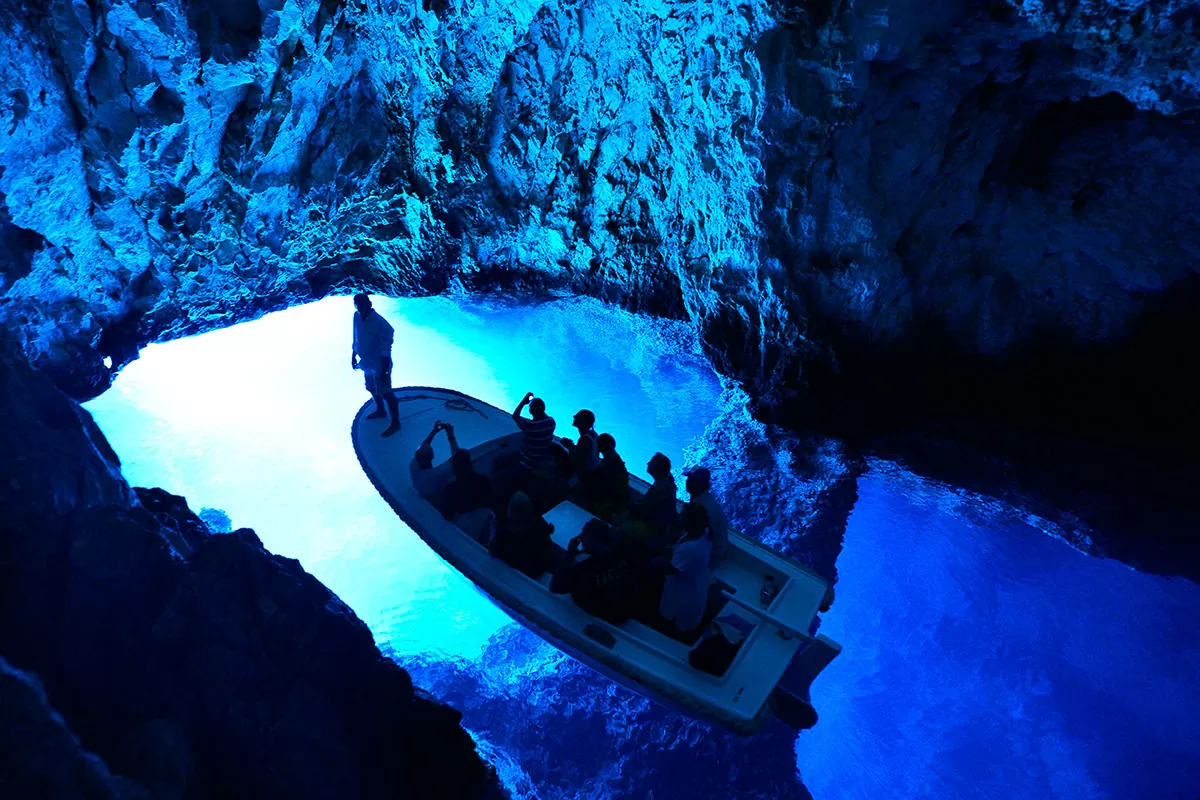
Blue Cave tours involve a small boat transfer across open water followed by entry into a naturally humid sea cave. The combination of maritime conditions and cave environment requires clothing that handles spray, uneven surfaces, and temperature shifts. This guide covers what works and what creates problems.
Quick answer
What to wear to a cave tour at Blue Cave depends on managing wet conditions and stable footing. Wear quick-drying layers, closed-toe shoes with grip soles, and bring waterproof protection for the boat ride from the mainland to Biševo Island. The cave interior stays cool and humid year-round, so a light jacket over moisture-wicking clothing prevents chill after sun exposure on deck.
The 24 EUR conservation fee covers regulated small boat access to a sea cave where the floor is permanently wet and the air holds moisture from the Adriatic. Most visitors misjudge the clothing requirements because they focus on the cave's famous blue light and overlook the maritime approach that precedes it. The transfer from Mežuporat involves open water, occasional spray, and a low boarding platform where balance matters more than style. Cave tour clothing starts with the principle that cotton stays wet. Quick-drying synthetic fabrics or merino wool regulate temperature when you move from direct sun on the boat to the cool shade inside the grotto. The temperature differential is not extreme, but it is enough to make damp clothing uncomfortable during the 10 to 15 minutes spent inside the cave chamber. A lightweight windbreaker or water-resistant shell handles spray during the approach and provides a layer against the cave's cooler air without adding bulk. Footwear determines whether the experience feels controlled or precarious. The rock surfaces inside Blue Cave are slick from constant seawater contact, and the boat deck can be wet from prior passengers or wave action. Closed-toe shoes with rubber soles that have defined tread provide the grip needed for boarding, standing on a moving platform, and navigating the cave's uneven entry ledge. Sandals, flip-flops, and smooth-soled fashion sneakers create slip hazards that the boat operators will flag before departure. Waterproof hiking sandals with ankle straps work if the tread is aggressive, but most visitors find that trail runners or water shoes offer better confidence on wet rock. Sun protection matters as much as wet-weather preparation. The optimal arrival window between 09:00 and 12:00 places you on the water during peak UV hours, and reflection off the sea intensifies exposure. A wide-brimmed hat that secures under the chin stays on during the boat ride, and reef-safe sunscreen protects skin without contributing to the marine ecosystem stress that already affects the cave environment. Polarized sunglasses reduce glare and make the transition into the dimmer cave interior less jarring, though you will remove them once inside to see the blue luminescence properly. What to wear to a cave guide comes down to anticipating the overlap of maritime and subterranean conditions rather than dressing for either alone. The clothing that works is the clothing that dries quickly, grips wet surfaces, and layers without restricting movement when you step from a rocking boat onto a slippery ledge.
“The temperature differential is not extreme, but it is enough to make damp clothing uncomfortable during the 10 to 15 minutes spent inside the cave chamber.”
Pack for wet conditions, sun exposure, and the practicalities of small boat transfers to a sea cave.
The Blue Cave operates under strict conservation rules to protect the delicate interior environment and ensure safe visits in the confined space. Tour operators enforce these regulations during the short viewing window inside the grotto.
The best arrival window is 09:00–12:00, when the sun's position creates the optimal sunlight angle for the blue light phenomenon. Visiting during these hours requires balancing sun protection for the journey with a light jacket to counter the temperature drop inside the cave.
Hot, 25°C–32°C; high UV exposure
Prioritize breathable clothing and sun protection before entering the cool cave environment.
Mild, 20°C–25°C; breezy
A light jacket is essential for the transition from the sunlit exterior to the cave interior.
—
Opting for early morning arrivals improves the experience by avoiding midday heat and peak crowd congestion.
Verdict: Plan your visit for weekday mornings during May or September to experience the optimal light phenomenon while avoiding peak crowds and high summer temperatures.
The Blue Cave is open for visitors daily throughout the week. Please plan your arrival according to these scheduled operating hours to ensure you have time for your boat transfer and tour.
Everything you need to know about what to wear to a cave tour
When considering what to wear to a cave tour, prioritize lightweight, breathable fabrics that dry quickly after exposure to sea spray. Since you will be traveling by boat, protection from the sun and wind is essential during the transit to the grotto. Comfort is the priority, so opt for attire that allows you to move easily during the boarding process. Accessing the interior requires navigating small boats, so avoid bulky accessories that might snag on equipment.